
ЕДУАРД СТРАНАДКО "КОНОПЛІ" / ЕDUARD STRANADKO "HEMP"
|
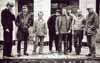
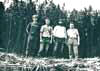
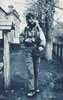
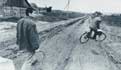
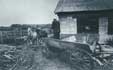
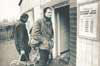
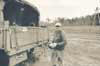
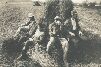
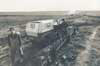
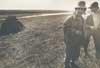
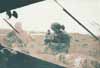
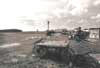
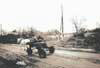
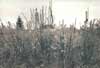
THE HEMP HARVEST EXPERIENCE IN THE POLTAVA REGION, UKRAINE When we hear the word "hemp," the first things that come to mind are often drug addiction, the sweet smell of smoke, and police reports. However, there are professional hemp harvesters who engage with this crop on a strictly legal basis. Ukraine even boasts a dedicated research institute in the historic town of Hlukhiv, which focuses on hemp cultivation and processing technologies. Back in the 1980s, collective farms in the Poltava region and other areas frequently hired seasonal labor brigades to harvest this plant. "Hemp will save Ukraine," says Eduard Stranadko, a veteran patriarch of the industry. Watch the full interview by Natalia Scarlatti to learn more. - Hired brigades were widely utilized on collective farms during the 1980s. Residents of western Ukraine built houses and harvested beets, Armenians constructed roads, you harvested hemp, and millions of urban citizens—especially students—were deployed for agricultural work. So, what exactly did the collective farmers do? - An interesting question. It is particularly ironic in this context that the rotten, cheap, and low-quality potatoes sold in shops for 14 kopecks were the ultimate result of this monumental 'battle for the harvest.' Meanwhile, there was employment for everyone. In our case, the collective farmers sowed, mowed, and provided the transport needed to haul hemp... - Then it’s unclear why they didn’t do it. Is it a taboo? - The truth is, this was heavy work meant for men. A single tractor could carry 3.2 to 3.4 tons. During the daily transportation of hemp to the factory, one man had to load approximately 5 to 6 tons. All-female brigades were assigned to other tasks, as they preferred not to engage in this grueling labor. In collective farms, men mostly worked with machinery, while the youth pursued their studies.In the 1980s, the leadership demanded an expansion of hemp cultivation. Hemp was a highly sought-after export, and its products were not limited to ropes and twines. There were even rumors of military orders. Thus, in a short span of time, hemp became a strategic commodity.It seems to me that reviving this crop could, if not rescue Ukraine, at least help it secure a niche in the global division of labor. This crop is hardy and does not deplete the soil, allowing it to be grown in the same place for years. It is processed almost entirely, and the leftovers serve as excellent, smokeless fuel for heating. - What does hemp field work consist of? - The technology used for this is quite simple. Initially, the hemp is harvested by small teams. For a period, the harvested stalks are left lying out in the sun and rain. During this stage, they need to be turned using specially crafted hooks (the hook made specifically for me now holds a place of honor at my home) to ensure that the entire crop receives equal exposure to the elements. After a while, the top layer changes color from green to yellow, and finally to gray. At this point, the hemp must be flipped over. This requires great skill from the workers. Once turned, the hemp should ideally maintain a predominantly yellowish hue. As you can see, there is no need to submerge it in water, as was done in the past. After that, one simply waits for the other side to turn gray as well.An alternative technique proposed by an experimental institute involving street sprinklers seems quite fantastical. In my opinion, it is much easier to simply position the field near bodies of water or in a low-lying area. Then, the morning and evening autumn fog will do the work for you. This part of the process is the most pleasant. There is something truly special about it. During the cutting and turning, the air is filled with the scent of fragrant pollen. It brings nothing but a great mood during the day and vivid, colorful dreams at night.A crew of ten people can cover more than one hundred hectares in just a few days. Generally, as my experience confirms, a large workforce is not necessary; I believe a team of 7 to 12 people is optimal. I once had to work on an enormous field in the Bahachka district, which was managed by four hired crews. - And here you bind with a blade of grass? - We used hemp back when there were no ropes available. In reality, though, looking back at that labor is just a romanticized memory. The processing technology at the plant required the sheaves to be fed in a cut form. This meant a worker had to stand in front of the machine with a sickle, cutting the ties by hand. Imagine having to do that all day long. I once calculated that I did about four thousand squats in the field during a single workday. Generally, the work was strictly rationed: you could always calculate the exact amount of rope used, which was prepared the evening before.Ropes, however, always brought trouble. Mice would eat them, whether they were natural or synthetic. If the hemp wasn’t cleared out in autumn, it was left out in stacks. If it didn't go straight into processing, enormous stacks—over three stories high—would be built at the plant. This posed a massive fire hazard. Once, we spent nearly a month delivering hemp to the Lutenka factory. The firefighters were absolutely furious about the lack of fire extinguishers, and rightfully so. Ironically, a fire did break out at the plant eventually. An old fire truck was patrolling the grounds, and according to the official report, a spark from its exhaust pipe burned down half the factory. - Is that plant you are gathering narcotic? - I don't think so. It is an industrial product. A scientific institute in Hlukhiv developed a special variety intended solely for manufacturing. For instance, this hemp must be neither too tall nor too short, and it is mostly leafless. To the best of my knowledge, producing narcotic hashish requires a completely different type of cannabis. I have heard that this is a 'male' plant, which looks like a small sapling. - Did you have to see it in the field? - Yes, variations sometimes occurred during the planting stage, and these specimens continued to develop. Individuals who found meaning in this practice utilized them. - And you? - Generally speaking, I don't like smoking. But if you are interested, let's look at this: is there really a genuine need to use hemp today, when back in the day, almost every backyard in the country had a poppy patch? Needless to say, back in the 1980s, the attitude toward it was completely different. As a fascinating example, poppies were sold quite openly at the city market in Poltava. To save time, people would even shell them right at their workplaces, tossing the pods under their feet. One colleague from Moscow once filled an entire sports bag with them. I can only imagine how shocked the market women were! I can also picture this fellow boasting back in Moscow later: "Look, I gathered this 'stuff' completely free of charge... for medicinal purposes!" Nowadays, poppies are viewed as a dangerous substance. Wild hemp is disappearing, and almost everywhere, not only thornapples but even fly agaric mushrooms have vanished from the forests.In the past, you could read about this in Anton Chekhov's The Cherry Orchard. For instance, the businessman Lopakhin says: "In the spring, I sowed three thousand acres of poppies, and now I've made forty thousand rubles in clear profit." He was teaching young people how to make money, so to speak.Ultimately, I believe the core of this major problem lies in a completely different dimension—specifically, in the financial interests of tobacco and alcohol manufacturers and merchants. This issue becomes especially prominent now, when our fairly good wheat harvest seems to be of no use to anyone. World monopolists will not allow its export, and we cannot consume it all ourselves. But if we turn that wheat into vodka, our people will drink it all without a second thought! Just yesterday, in a regular grocery store, I counted 240 varieties of hard liquor, 40 brands of beer, and 60 types of cigarettes... - Something put you on the wrong track. You value Chekhov, you count every drop of vodka... What did you waste your free time on then? I mean, you weren't working all the time. I imagine rainy days were bad for work... - For me, this activity was far more than just a dull way to earn money. The people who joined these seasonal hemp-harvesting brigades were no ordinary workers either. Personally, I had no desire to work or spend my leisure time with unpleasant people, alcoholics, or drug addicts. As for the earnings, during one 60-day working season (spanning three calendar months), I once made over four thousand Soviet rubles. To put that into perspective, my grandfather, a professor in the Crop Science Faculty at the Agricultural Academy in Poltava, earned roughly the same amount in an entire year.And how did we spend our free time? That was truly something special. Our accommodations were unique: we lived in authentic Ukrainian thatched-roof cottages. Today, you will hardly find them anywhere. Although these buildings might seem primitive, they were remarkably warm and eco-friendly. These roofs, which many people nowadays look down upon, could easily last for decades without needing a single replacement. - It is a pity that there is no longer a place to laugh about it, unless one visits an ethnographic village. - We had a vast amount of literature brought to us by young men from Moscow and St. Petersburg. This included trendy authors like Castaneda, books on informal Christianity, and various mystical texts. It was all printed underground, which gave the material an incredibly mysterious and alluring look. Surprisingly, one could also find fascinating things in rural libraries. Eventually, 'forbidden' literature began to appear almost openly in popular science and arts magazines. Personally, I became hooked on Skovoroda, the historical Ukrainian philosopher. Among us was a man from Kyiv who had been expelled during his second year at the Poltava Pedagogical College. His only offense was spending his summer hiking through villages and entertaining the locals by reading this philosopher aloud. Ironically, Skovoroda's works are now published completely legally. - The KGB will be ecstatic if they catch you red-handed. - Yes, they always had a personal interest in it, but we deliberately chose not to spread this knowledge among the local population. It would be fascinating now to look through the KGB archives regarding my anti-Soviet activities...
|